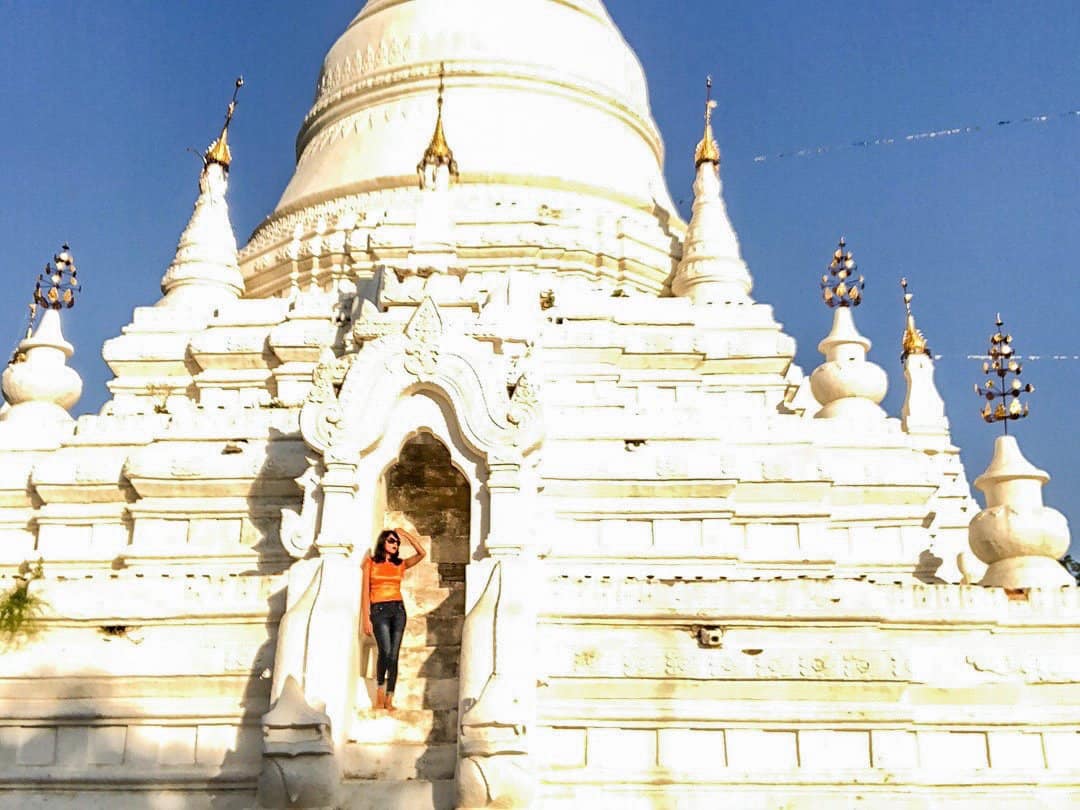
The Bagan Empire reached its zenith between the 11th and 13th centuries. After unifying a large territory similar to present-day Myanmar, it became a center for Buddhist art and studies. As a destination for scholars and pilgrimages, over 10,000 religious structures were built in that time – from single-room shrines to multi-level pagodas containing hundreds of relics. Some 3,500 survive today, making Bagan the most significant archeological site in Buddhist culture and religion.
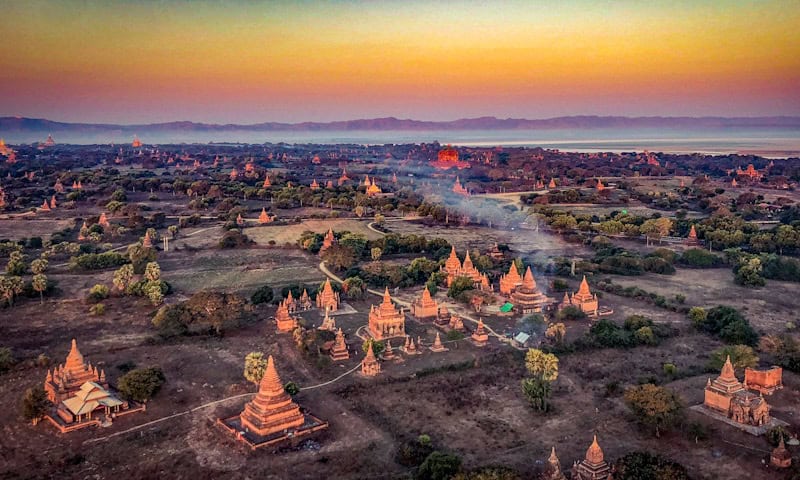
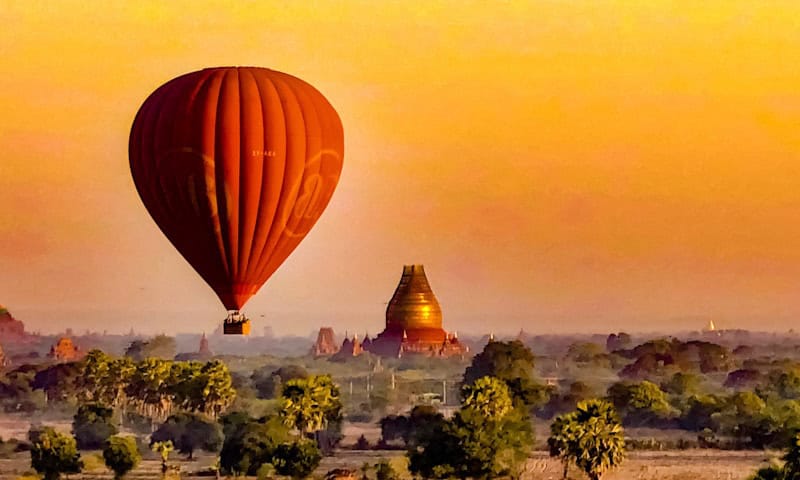
Sunrise over Bagan
The Making of an Empire
A Succession of Kings
At the beginning of the 2nd millennium, in 1001, King Kunshaw took the throne. His only son, Prince Anawrahta, was raised with two sons adopted from the previous king. When his stepsons came of age, they banished him to monkhood on Mount Papa. According to legend, right after the elder brother became king, he died in a hunting accident. But modern historians believe he was assassinated by the younger brother, who then took the throne. When that brother also decided to take the previous queen, Prince Anawratha’s mother, as his wife, the young prince rebelled and, in this series of successions, became king.
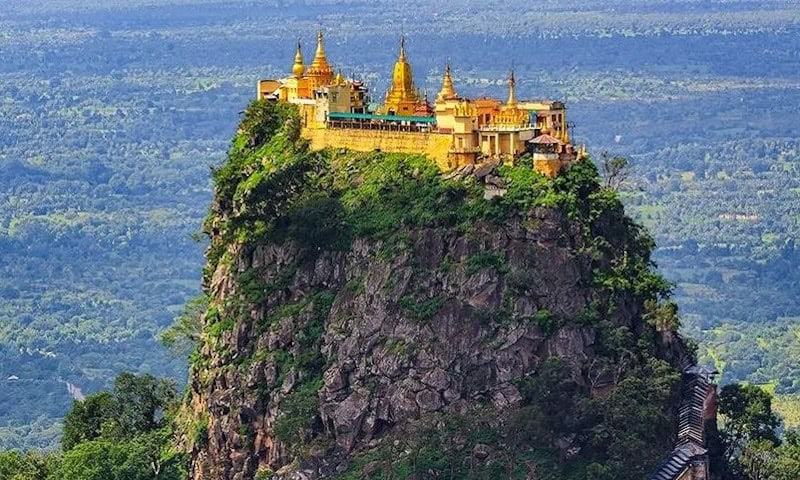
Mount Popa
Set atop a dormant volcano, Mount Popa is a revered center for nat worship, a belief in spirits that predates Buddhism in Myanmar.
Anawrahta initially offered the crown to his deposed father. But as Kunshaw was aging, he gave his blessing to his son to become the rightful king. Anawrahta proclaimed him and his mother as the Rahan (“monk”) king and queen of Popa Monastery, where they spent the rest of their days peacefully.
The Ten Perfections
In Buddhist Burmese belief, a good king should possess the ten perfections. Virtue and generosity are of utmost importance, followed by wisdom, kindness, tolerance, equanimity, restraint, resolve, truthfulness and endeavor. Anawrahta had already proved to be virtuous in defending his mother and offering the throne to his father. He would prove his generosity next.
Ridden with guilt over killing his brother and heeding the prophecies of a dream, Anawrahta sponsored the building of temples and monasteries so that his kingdom could benefit from merit-making, the Buddhist way to salvation. He also planned for infrastructure, including dams and roads, so that he could bring water and trade to his people.
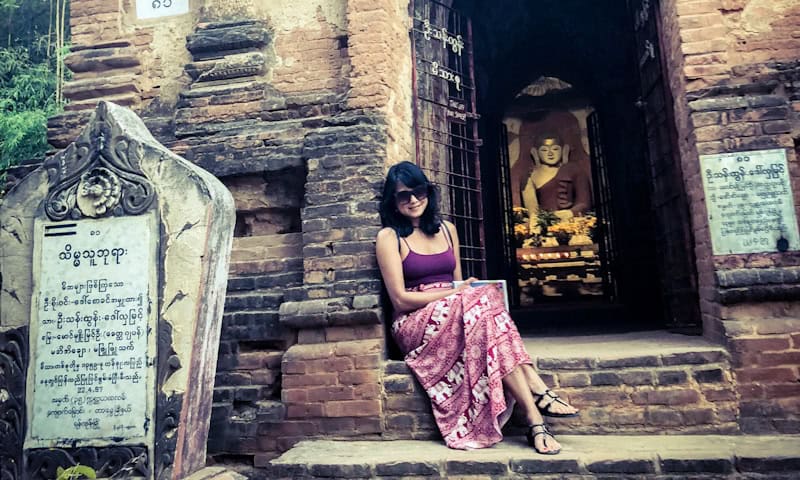
Wish-Giving Buddha
Merit-making is a central Buddhist practice involving acts of generosity and kindness to accumulate good karma.
Expansion and Conversion
By bringing irrigation to once dry lands, agriculture grew. So did the the population, royal coffers and army. By 1056, Anawrahta had unified the four kingdoms of medieval Burma. He quickly built fortresses to the north and along the river to secure his farmlands and borders. He fortified city walls and established a trading route for crops and supplies. His rule marked the birth of an empire.
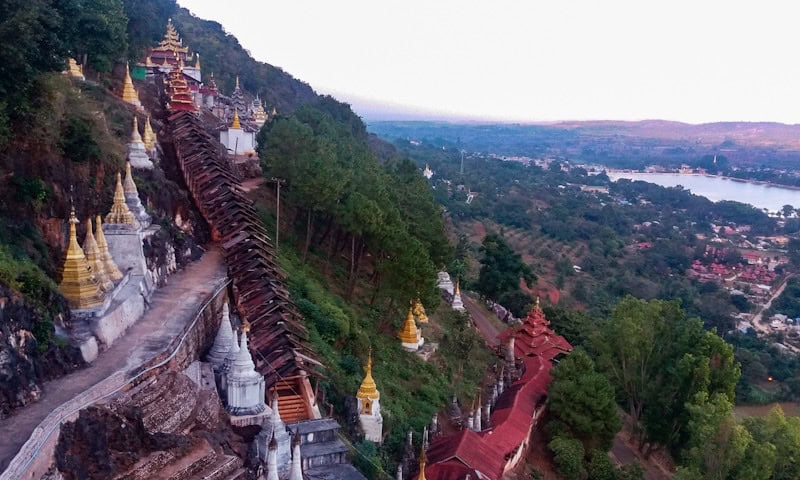
Shan States
These hills were largely uninhabited until they became part of the empire and the Shan States were founded.
The conquest of Mon in 1044 was especially significant. Anawrahta had met Shin Arahan, a Theravada monk practicing a purer form of Buddhism, and he resolved to convert his kingdom, which belonged to an Ari sect. Ari monks were notorious for drinking alcohol and practicing jus primae noctus – having sex with virgins the night before their wedding. Anawrahta invaded Tathon, the capital of Mon, to bring back the Pali Canon – the sacred doctrine of Theravada Buddhism. This allowed him to strip Ari monks of their power and convert their followers.
The Great Chronicle
He also sent officials to Ceylon (modern-day Sri Lanka), where Theravada Buddhism originated, to invite religious scholars and bring back other sacred scriptures. He embarked on an ambitious program to build more temples, and Bagan became a prominent center for Theravada Buddhism. Monks and scholars from Ceylon, Thailand and the Indian subcontinent came to study, not just religion, but law, philosophy, grammar, science and medicine.
Shin Arahan supervised the training and study of monks and scholars. He founded over 1,000 monasteries across the empire. He would become the religious advisor to Anawrahta and three successive kings. In their reign, over 10,000 temples, pagodas, shrines and stupas were built within a 40-meter radius – the highest concentration of Buddhist architecture ever built.
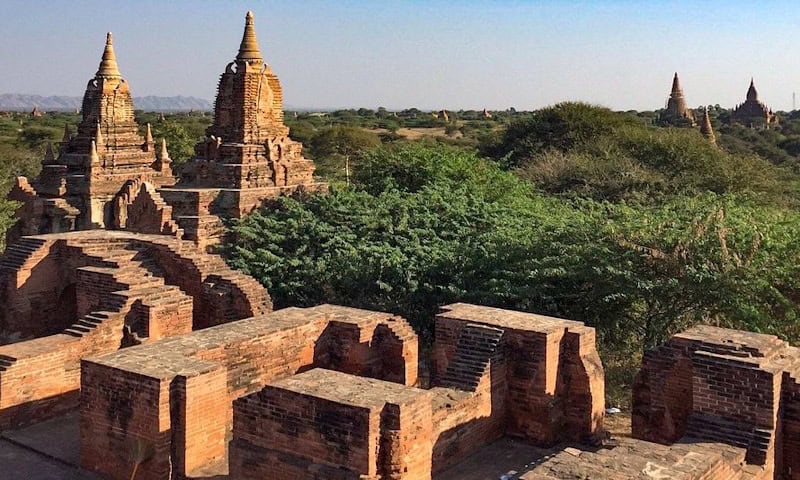
Soemingyi Monastery
The current monastic school system in Myanmar date to the monasteries Shin Arahan founded. Today, monasteries supplement government schools and provide education for underprivileged children.
Bagan kept consistent communication with other Buddhist centers. The Great Chronicle, a diverse collection of documents, treatises and mythological stories, was first commissioned during this period. Written and collected over several centuries, it provides the most extensive historical record in Southeast Asia and has been used for subsequent archives.
The Temples of Bagan
Shwezigon Pagoda
As told in The Great Chronicle, when Anawrahta requested Buddhist texts from Ceylon, he also asked for the tooth of Buddha. An ancient belief holds that whoever possessed it had a divine right to rule. The gilded Shwezigon Pagoda was built to house that sacred relic. Legend has it the site was chosen by a court elephant carrying the tooth for the king.
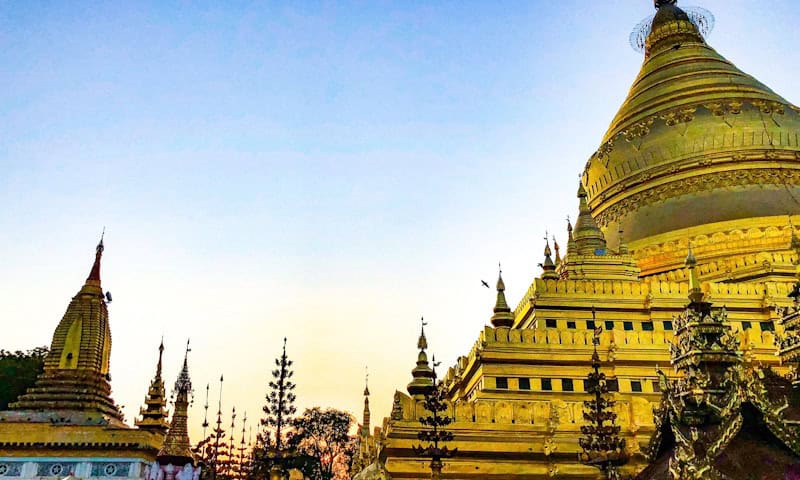
Shwezigon Pagoda
Began in Anawrahta’s reign, the pagoda was completed in 1090 by his son and successor, King Kyanzitta. It’s guarded by a series of Makaras, sea creatures from Hindu mythology. In the southeast corner is a shrine to Mahagiri nats. Nat worship in Myanmar dates back to 400 AD. As a testament to tolerance, the king recognized the practice and made official 37 nats so his people could continue to pay respect. Near the great lion images are edicts from Kyanzitta, which tell the story of the pagoda and the king’s coronation.
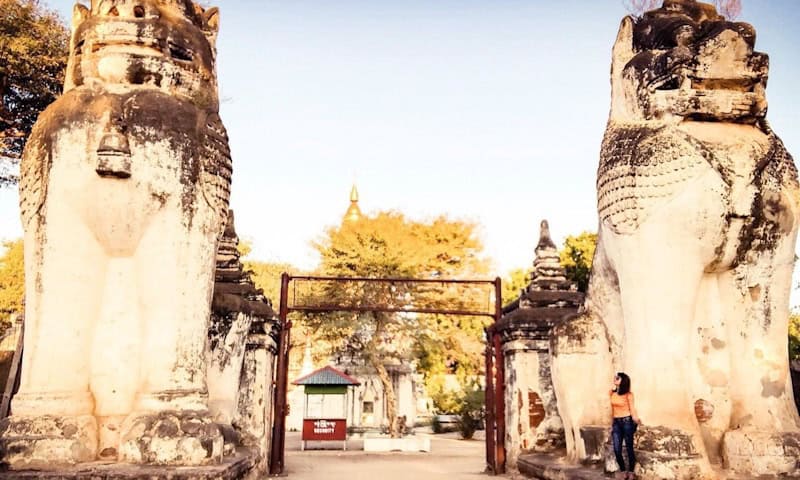
Lions’ Gate
The chinte comes from an epic poem of a prince who slays a lion only to find out (like Oedipus) it was his own father. He then builds a temple in honor with a lion's statue to guard it. This iconography is found all over Myanmar.
Every year, in the ninth month of the Burmese calendar, Shwezigon Pagoda hosts a festival that attracts thousands of devotees. It’s the oldest pilgrimage site in Bagan.
Lawkananda Pagoda
As the legend continues, a second tooth of the Buddha miraculously appeared at Shwezigon Pagoda. Again, it was put on the elephant’s back, and this time, it came to rest on a bluff above the river. Lawkananda, meaning “Joy to the World” in the ancient Pali language, is much smaller in design and was completed in 1059 during Anawrahta’s reign.
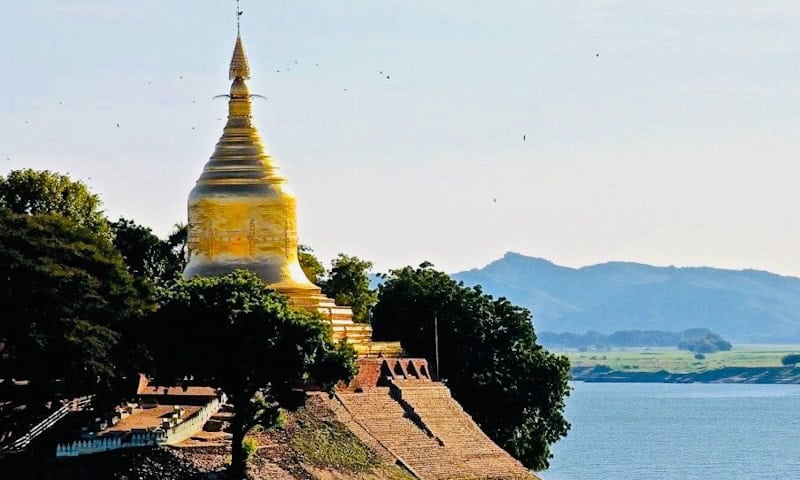
Lawkananda Pagoda
Three marble-tiled terraces surrounding a bell-shaped dome stand out with views over the river. The initial white marble was recently gilded with gold leaf. The shrine holding the sacred tooth relic is no longer open to the public, but the eastern prayer hall features a two-meter Buddha statue which attracts worshippers from all over.
Ananda Temple
One of Bagan’s most beautiful surviving structures, Ananda Temple was built to replicate a legendary cave temple in the Himalayas. It was commissioned by Kyanzatti in 1105 after five Indian monks visiting his court told him of the beauty of the Himalayan landscape.
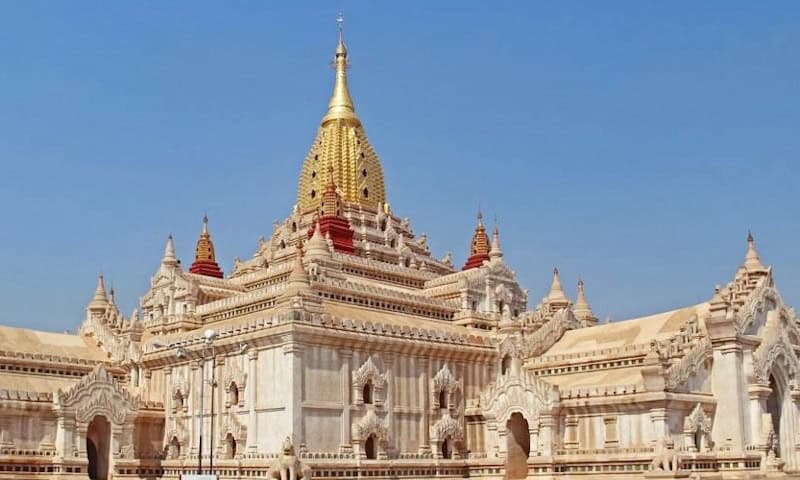
Ananda Temple
Stone chintes stand guard by arched entryways that lead to four Buddhas enshrined inside. These statues make Ananda Temple the most revered by Burmese Buddhists. Thousands of green-glazed terra-cotta tiles surround the sides and terraces of the temple. But its most splendid feature is the gilded tower over whitewashed walls. The corncob pattern is a clear influence of its Indian architects, who, as the story goes, were executed after the temple’s completion to ensure there would never be another one built like it. It’s believed they are entombed underneath, and their souls guard the temple to this day.
Thatbyinnyu Temple
Thatbyinnyu means “omniscience” – the state of enlightenment attained by the Buddha. It was completed in 1051 under Kyanzatti’s successor and grandson, King Sithu, who donated boats full of rubies for its construction. It spurred a period of rededication to Theravada Buddhism and advanced religious scholarship during his reign.

Thatbyinnyu Temple
Measuring 61 meters, it is the largest temple in Bagan, and its spire can be seen from everywhere in the city. The five-story temple serves as a monastery and library. Monks reside on the first and second floors. The third floor holds religious images, the fourth stores books and scriptures, and the fifth guards sacred relics. On the northeast corner is a cave known as the Tally Pagoda. For every 10,000 bricks used for the construction of Thatbyinnyu, one brick was stored in the cave.
Gawdawpalin Temple
Gawdawpalin resembles the design of Thatbyinnyu. It measures 55 meters, the second tallest temple in Bagan. As evident in its name, which means “platform to which homage is paid,” it’s used specifically for meditation and devotional worship. Indoor shrines feature vaulted ceilings that give it an ethereal atmosphere. A square tower and conical spire top three lower terraces and four upper terraces.
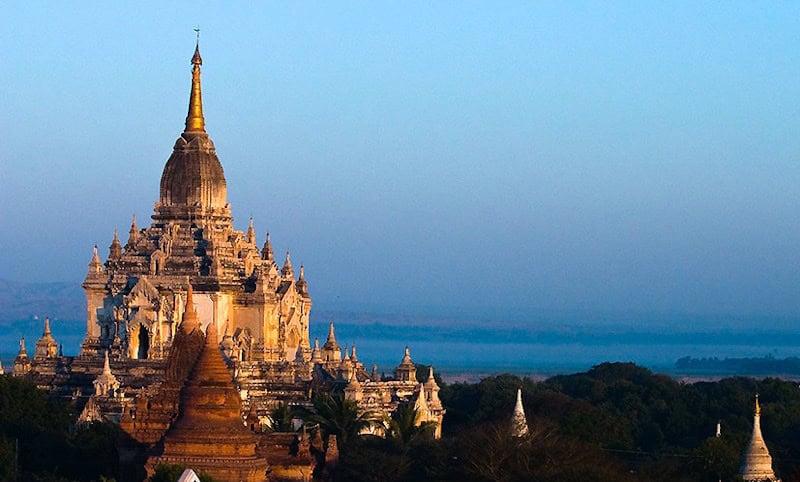
Gawdawpalin Temple
Construction began in 1203 under King Sithu II, whose peaceful and prosperous reign pushed Bagan culture and identity to supersede the previous Mon and Pyu kingdoms. At its height, the capital city covered an area of 100 square kilometers – twice the size of Ancient Rome. Theirs became the official language of the empire, home to over 400,000 people. Sithu’s leadership was unchallenged. He codified a standard system of law and established the Royal Palace Guards. He is considered the last significant ruler of Bagan, which declined after his death due to Mongol invasions.
Mingalazedi Pagoda
This is one of the few temples with the complete Jakata tales depicted on its terra cotta tiles. It was built in 1284, right before the Mongol army reached the city.
Art and Architecture
The Evolution of the Stupa
Pyu settlements along the Irrawaddy River Valley date to 200 BCE. They were the first to build temples and stupas in the region. Sri Kesta (meaning “City of Splendor”), just south of Bagan, was home to Pyu kings and contains remnants constructed between the 4th and 10th centuries. Bagan’s first architects imitated the cylindrical stupas and symmetrical archways, laying the foundation for their refined building aesthetics.
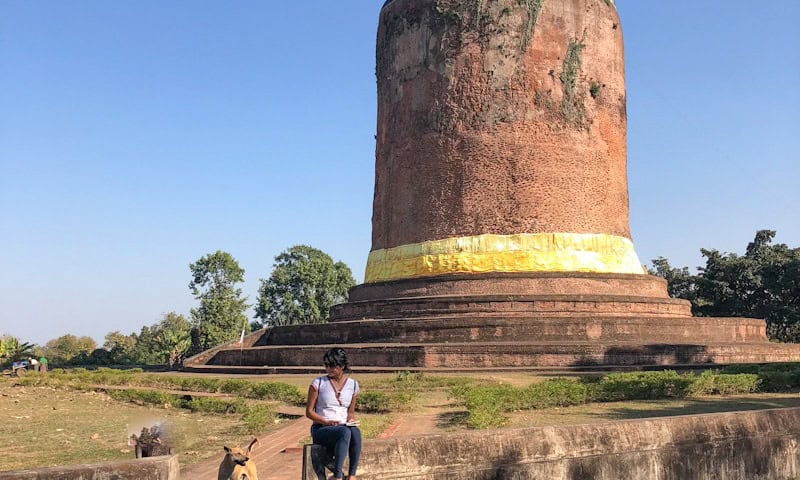
Bawbawgyi Pagoda
This 4th-century stupa - a simple yet elegant brick structure - served as the prototype for Bagan's earliest pagodas.
When the 30,000 Mon prisoners were brought to Bagan, they included a legion of builders and designers who incorporated the use of stucco and intricate carvings on temple walls. Mon-style temples contain a single entrance and vestibule that lead to the inner sanctum. Their façade often depicts floral patterns and mythological figures reminiscent of Mon traditions topped by a more slender stupa.
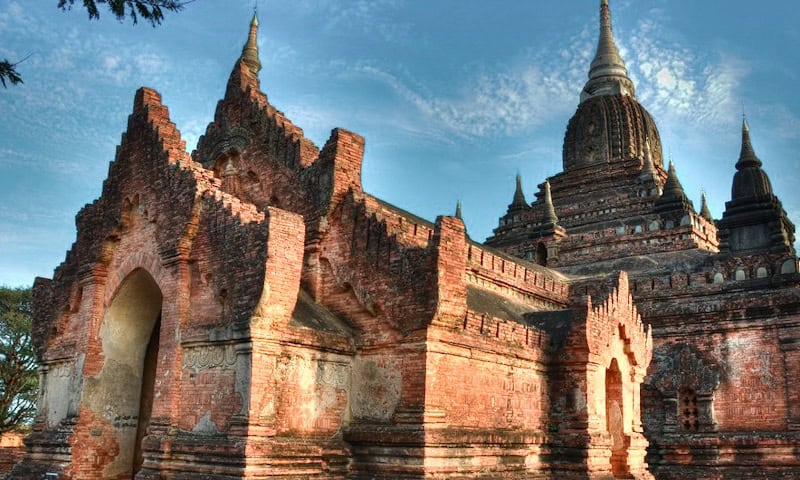
Nagayon Temple
When pilgrims from India began arriving, the temples became more elaborate. Embellished roofs are topped with elongated corncob towers similar to Hindu temples. A central complex surrounded by four entryways follows the sacred mandala pattern, which symbolizes the Indian belief in symmetry and balance.
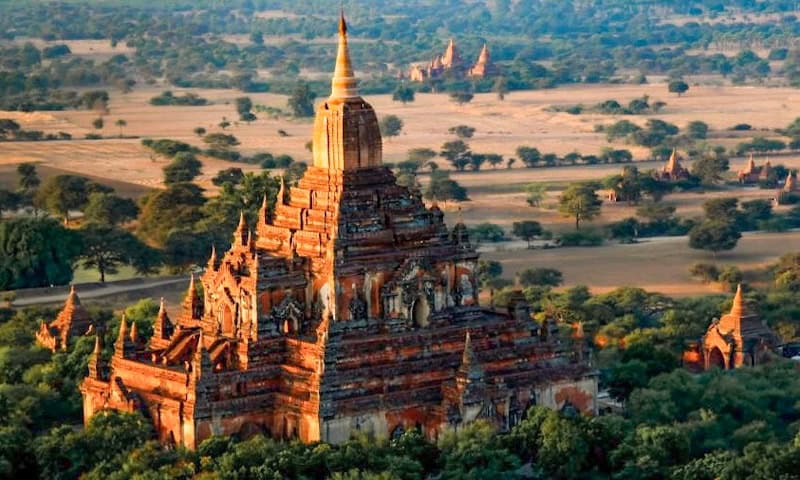
Htilominlo Temple
Bagan’s Golden Age
Skilled painters and artisans played a crucial role in shaping the cultural landscape of ancient Bagan. Temple walls were illustrated with tales from the Jataka. These vivid depictions narrate the 550 lives of Buddha, including his biography as Prince Siddharta, the story of his enlightenment, and his eventual death. Panels and framed canvases adorn walkways, and murals and frescoes decorate the ceilings.
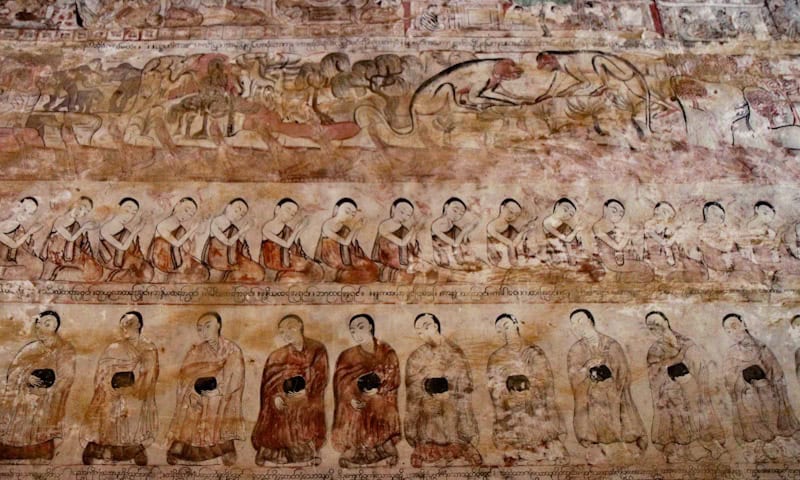
Sulamani Temple
- frescoes depicting the Jataka.
Sculptors and stone carvers worked on stucco and relief. Brick temples and monasteries were originally encased in stucco, which was molded when wet and then allowed to dry. In addition to the Jataka Tales, they shaped religious symbols, mythical creatures, traditional motifs and geometric patterns on the roofs and walls of temples. The most prominent is the lotus flower, the symbol of purity and enlightenment in Buddhism.
As more pilgrims came, the demand for intricate religious goods rose. Skilled artisans were brought to Bagan, which became a center for pottery and lacquer. Until today, lacquerware is made by hand in Myanmar, one of only a few countries doing so. The elaborate patterns can take months to complete as 15-20 layers of lacquer are usually applied to each piece.
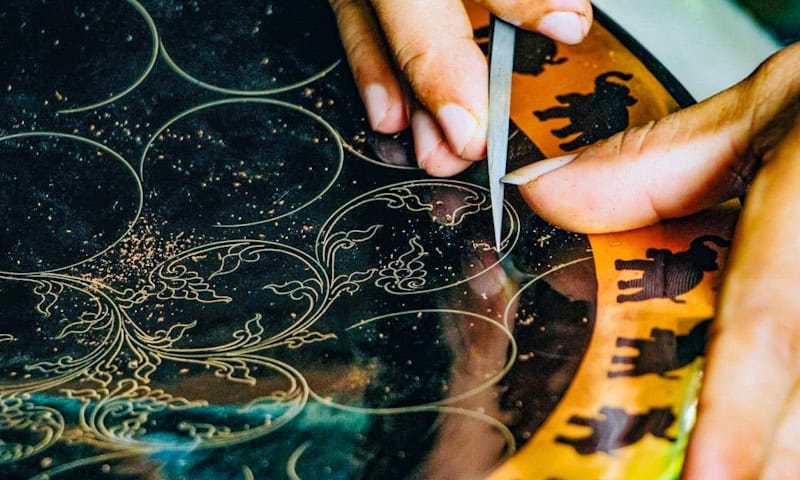
Bagan’s Lacquerware
The Fall of Bagan
Unfortunately it was this prolific building of temples that also caused Bagan’s downfall. Everyone, including the royal family, donated more and more to the monasteries, which were exempt from taxes. Stripped of land and resources, the royal treasury began to empty in the 13th century and Bagan was unable to keep funding its army.
A series of rebellions weakened the empire in 1258. Then, in 1277, a Mongol army led by Kublai Khan invaded from the north. They drove back Bagan’s army and conquered all of Bagan in two subsequent wars. King Nharathihapati and his heirs were assassinated. Although the Mongols would eventually lose interest in Bagan, it left a political vacuum, the empire fragmented, and the city was left to ruin. It remained a pilgrimage site for Buddhists, but many of its temples crumbled and disappeared over the centuries.
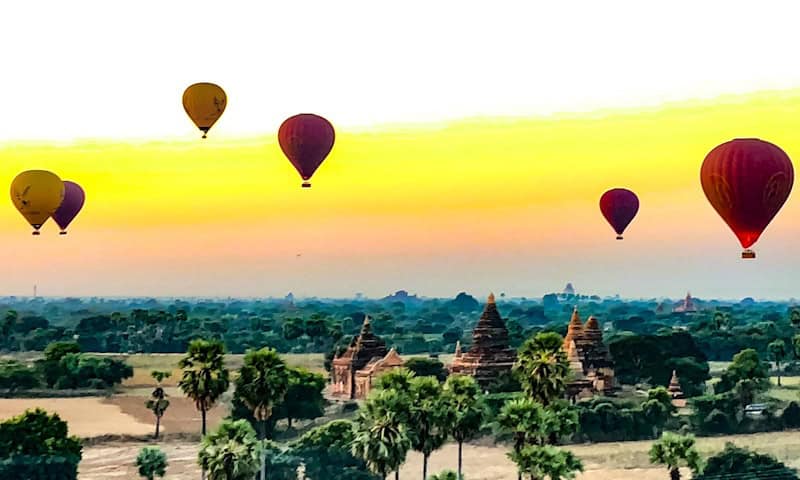
Sunrise ride over Bagan
In 1990, the Myanmar government began renovating the remaining temples of Bagan, but with little regard to their original appearance. That has since turned into a massive international project to restore them with more historical accuracy.